
We did more in 2025 than in any other year in the past. Unfortunately, writing a blog post wasn’t among my accomplishments. When I looked back at my posting history, I discovered that my last post was 2024 in Review, which posted on December 18, 2024. Largely, the Retired in Panama Newsletter has replaced this blog. In 2025, I posted 52 issues of it. I published a free newsletter every Monday and emailed it to my subscribers. That sounds like an excuse; however, I prefer to call it an “instead of.” I will keep this website and blog active as long as I am able. Around 4000 people have explored the archives and learned since 2017, when Jen and I initiated the idea to retire in Panama. If this blog is our only communication with you-we’re still here.
Read on to hear how we spent 2025.
Besides writing a weekly newsletter and traveling, I published The Panama Fonda Cookbook and launched three fiction mystery/thrillers under the pen name, Logan Bahr. I also laid my father to rest. This year we said goodbye to two of Dad’s brothers as well. As you read on, forgive me if I appear philosophical. It was a tough year.
I reworked, reformatted, and released Murder in Eagle Cove under the name Logan Bahr in January. The outcome created an improved path with a series. The Detective Larry Saunders Mystery Series is now gaining popularity in the marketplace. Sales and downloads of the books are nearing 10,000. I released Malfeasance in Eagle Cove on November 15th, in time for the Christmas sales. I’ve begun work on the fourth in the series, which deals with illegal sports betting. As with the previous three, there will be dead bodies, plot twists and an intriguing, ripped-from-the-headlines subject. Malfeasance in Eagle Cove deals with human trafficking. The subject was hard to write, and it’s the first of my series to carry a trigger warning. There were days, during the writing of it, I had to walk away and take a break. I hope you will visit Logan’s amazing website to find out more about what’s happening in Eagle Cove. I’ll post links at the end.

During the first week in January, Panama lost an angel. Barbara Scott passed away, leaving the entire community mourning her loss. Barbara devoted her life to assisting the underprivileged. She was one of the first people Jen and I met when we arrived here. We assisted her cause by collecting donations, both financial and material, to help Panamanians in the mountains and interior of Panama. Her dedication was inspiring. I am sharing a couple of pictures below. The one on the right is of her receiving the annual Starfish Community Service Award from Beach Business Networking. The organization gives the award for selfless dedication to the community. She frequently looked after people lacking medical care, including pregnant women and children. She always kept a stockpile of clothes, blankets, and toiletries for Chiriqui mountain missions.


By the first week in February, I had released the Panama Fonda Cookbook. This was a project in which I invested a considerable amount of time. The idea came to me as I was eliminating recipes from the second edition of my expat, adventure, and travel guide, Retired in Panama. The fonda recipes gave way to other important information and adventures. I gave a digital copy of the Panama Fonda Cookbook away to my newsletter subscribers while still offering it on Amazon. The cookbook is a consistent favorite for people seeking simple recipes for genuine Panamanian street food. Before the end of this post, I will share links to purchase a copy for yourself.
Soon after the cookbook was released, Jen and I welcomed her cousin, Greg, and his wife, Judy, for a much too quick visit. They arrived only three days before our first cruise of the year. They would cruise with us and several other couples who live or snowbird here in our neighborhood. Greg and Judy realized quickly that they should have planned more time to appreciate Panama like Jen and I do. I’ll talk more about that later-they returned for another visit before the year ended.
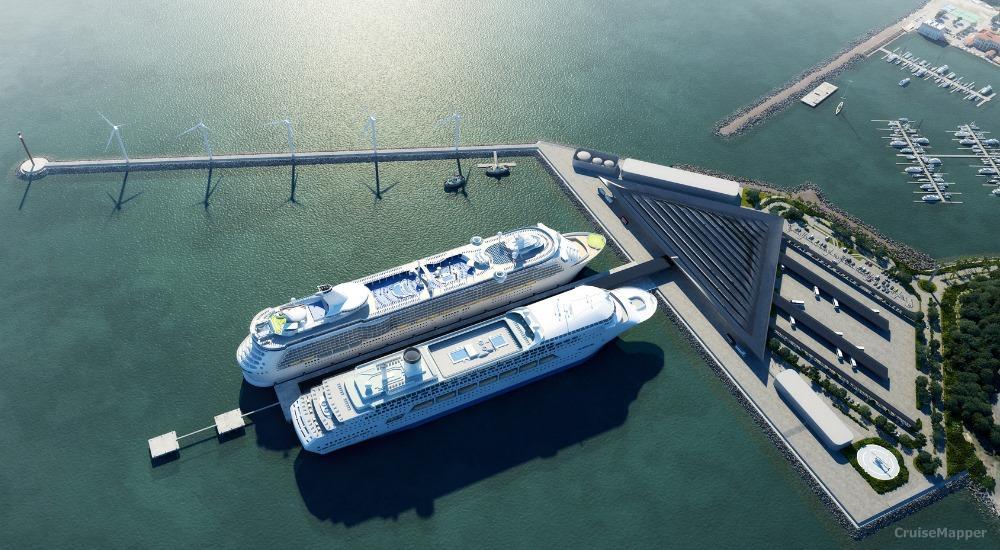
We boarded the Norwegian Jade at the beautiful new cruise port in Panama City on the Amador Causeway. The new port is an amazing construction feat. Since 2019, cruise ships going to Panama City have used Port Fuerte Amador on Flamenco Island, which is by the Pacific entrance to the Panama Canal.
The dock is on one of the four islands, which are connected to form the Amador Causeway. You’ll find yachts, marinas, shops, restaurants, go-karting, and a drive-in cinema along the causeway. Naos, Culebra, Perico, and Flamenco are the names of the four islands. The vessels awaiting passage through the Panama Canal are visible from the four islands.
In October 2017, the Panama City Port Authority started construction to expand its cruise ship capacity by opening the new cruise terminal. The cruise port in the Caribbean port city of Colon, at the north end of the canal, was already, and remains in operation. The image below is of the new cruise port in Panama City.
 |
We started sailing north through the Panama Canal the following morning. The Traffico Panama webcam captured the featured image above as our ship passed beneath the Bridge of the Americas, the oldest bridge traversing the canal. The ship’s crew narrated our trip through the Panama Canal as we marveled at the canal’s magnificence. A passage through the Panama Canal is the pinnacle of any Panama Canal cruise. The images below are from our transit. We spent the entire day transiting the canal before emerging into the Caribbean at the port city of Colon.
|
|
|
|
|
|
|
|
|
Our ship traveled east, making port in Cartagena, Colombia. Jen and I toured the La Popa Monastery & Gold Museum. We explored the intriguing history of Cartagena by visiting landmarks that shaped the city, especially its UNESCO World Heritage Site, Old Town. The 17th-century La Popa monastery provides a panoramic view of the sprawling urban landscape as it sits atop the city’s highest point. Inside, we found a modest interior other than the gold-foil altar. San Felipe de Baraja fort is an even older architectural treasure where we had time to pause for photos. They built it to deter pirates from attacking Cartagena because of its vast gold reserves. While browsing the Gold Museum, we saw a collection of the precious metal, much of it pre-Columbian. A folkloric performance there added more dimension to our understanding of Cartagena. The exhibits at the Naval Museum were equally fascinating. We saw the 19th-century Peral Submarine, the world’s first such battery-powered vessel. After our tour, we explored Old Town to round out the enlightening experience.
|
|
|
|
|
|
|
|
|
We had a great time at sea on our way to Aruba. Jen and I hosted a meet and greet for people interested in our retirement experience in Panama. Over twenty fellow cruisers came to chat about retirement in Panama. After the meet and greet, we placed my books in the ship library.
|
|
One of the other cruisers organized an afternoon pub crawl. We went from bar to bar on the ship, enjoying a different drink at each. At the first stop, we had a Lemon Drop. The second was a Red Bubbles. At the third bar, we had a Mudslide. We had trouble finding a bar to make the Duck Fart, but we overcame it by teaching a bartender the ingredients. Later, we had Guinness at O’Sheeans, a Smoky Peach Margarita at the lounge in Spinnakers, and an Espresso Martini. Over a hundred people slipped into lime green shirts and joined the craziness.
|
|
|
|
|
|
|
|
|
We docked the following morning in Aruba. Because we had visited this port previously, the cancellation of our excursion did not disappoint us. We spent the morning shopping with Greg, Judy, Maxine, and Dave. We found the Aruba Aloe Store and a few treasures we couldn’t live without. Jen loves Aruba Aloe shampoo and conditioner, while I get a medicated hand lotion that soothes my dry, cracked hands. We’re huge fans of the products made from Aruba Aloe. The morning shopping left us exhausted, so having a quiet afternoon at the pool was the ticket. In the evening, the eight of us gathered for dinner in the main dining room.
|
|
|
|
|
The ship docked in Curaçao on Valentine’s Day. We went ashore to enjoy the Hato Caves & Ostrich Farm. After a short drive, we arrived at the impressive Hato Caves. The system of passages beneath the surface runs from Curacao to Latin America. This site features stunning limestone formations, romantic pools, the iconic Madonna statue, and a hidden colony of long-nosed fruit bats. After our tour through the caves, we were off to an ostrich farm, where we boarded a safari truck and our local guide gave us detailed information about this spectacular farm. The birds were impressive, and it was really interesting to interact with them. We hand-fed them, and it was a great experience! Also, how the egg’s different phases developed into one of the biggest birds. We weren’t lucky enough to see one of the birds being born during our visit.
|
|
|
|
|
|
|
|
|
|
|
Later, we had an evening tour of Willemstad, Curaçao. We enjoyed the tour through the historic section of Willemstad in the evening when temperatures were cooler, and the city lights glowed radiantly. First, during our scenic drive, we stopped at an amazing viewpoint overlooking the city near a historical fortress for magnificent pictures and a toast with Blue Curaçao, a sweet liquor made from Laraha oranges grown on the island. Then, we continued with a cool evening walking tour, meandering along, and passing a collection of colorful, Dutch-inspired homes overlooking the canals. This colonial architecture and the district’s European-style layout earned Willemstad a UNESCO World Heritage Site designation. Fort Amsterdam, built in 1634, could be the architectural highlight; a cannonball is still in a wall. The colorful arched lights of the unique 19th-century Queen Emma pontoon bridge sparkled on the water at night. Finally, we stopped for a fun photo at the orange Dushi sign, another icon; the word means “sweet” in Papiamentu, the official language of Curaçao. This was appropriate on Valentine’s Day. I took the picture below of my sweetheart at the Dushi Sign.
|
|
|
|
|
|
|
|
|
We ended our day with a splendid meal at Cagney’s aboard the ship. Everyone who traveled with us shared a Valentine’s Day meal.
The captain navigated the ship from St. Kitts to Tortola overnight. Jen and I took the Discover Tortola excursion. We took in stunning views as our open-air safari-type vehicle drove through Road Town, the capital of Tortola. After beginning our ascent into the hills, heading to Belle Vue, we stopped at the lookout point near Manchester to take photos. We enjoyed the beautiful scenery as our tour continued along the ridge roads, capturing views and adjacent islands, including Guana Island, nestled in the Atlantic Ocean. We continued along the ridge roads and down through the coastal villages of Carrot Bay, Capoons Bay, and Apple Bay and journeyed over to Pusser’s Landing—an open-air, West Indian-inspired village nestled into Soper’s Hole. There was time to browse the village’s colorful boutiques filled with handmade mementos and stylish apparel.
The following day we discovered Puerto Plata, Dominican Republic. Our tour provided an overall understanding of Puerto Plata through various attractions that lent insight into the local history and lifestyles. At the Macorix Rum factory, we learned how the acclaimed spirits are distilled and aged according to a proprietary process that the Carrion family has handed down through the generations. Our favorite sample was the apple-flavored rum. While driving around the 60-block historical city center, we stopped to explore the 16th-century Fort San Felipe and browsed the unusual Amber Museum. Its collection of plants and ancient creatures preserved in fossilized tree sap, known as amber, is extraordinary. The Luperón House Museum contains photos and personal effects that celebrate the achievements of national hero General Gregorio Luperón. For a perspective of present-day Puerto Plata, we meandered through popular Central Park, browsed the artisan shops that line the atmospheric streets, and ambled down Pink Alley and Umbrella Street. We also stopped at a cigar factory and store to watch how they roll cigars. We took them up on the offer of a free sample.
One of our favorite parts of the cruise experience is the amazing food. I rarely post food pictures, but here are a couple from Cagney’s Steakhouse and the Brazilian restaurant on the Jade. Jen and I had a magnificent meal at Cagney’s after our adventure in Puerto Plata on Monday. On Tuesday we celebrated the conclusion of a great vacation with Greg and Judy at Moderno, the Brazilian restaurant.
We docked in Miami about the third week of February. This was our last stop. Only a cruise enthusiast will understand the sadness felt when a cruise ends and the bags go into the hall.
We disembarked and bid farewell to Greg and Judy. They returned to Pittsburgh while the rest of us went to the airport and boarded our short flight to Panama. Between our February cruise adventure and the first week of May, we were busy enjoying one of our favorite times of the year in Panama. During peak season, we enjoyed special moments with many snowbird friends. High season 2025 was busy with preparation for the launch of Mayhem in Eagle Cove, Easter, Carnival, and Cinco de Mayo. By the first week of May, we celebrated the second launch of Logan’s Detective Larry Saunders Mystery Series, Mayhem in Eagle Cove. People will remember the party for the launch for years. I wanted to include photos of the celebration below. We had almost fifty people turn out to share our excitement.
I offered free downloads of Murder in Eagle Cove to celebrate the release of book two, Mayhem in Eagle Cove. The offer appeared on Logan’s social media and website, and as a result, over 4,000 free copies landed in the hands of anxious readers. The offer helped catapult Murder in Eagle Cove to rankings on Amazon that I never expected. Thanks to everyone who downloaded the book. The frenzy of downloads resulted in Murder in Eagle Cove ranking #35 in the Kindle Store, #1 in Crime Thrillers, #1 in Conspiracy Thrillers, and #1 in Financial Thrillers. Please leave an honest review after you read it. Before the middle of May, we were off on another adventure. We traveled to our condo in Florida for a few days. From there we traveled north to Enterprise, Alabama, to attend our granddaughter’s high school graduation. During graduation weekend, we enjoyed time with our daughter, Hope, son-in-law Jeremiah, and grandchildren Victoria, Vanelope, and Jameson. We took Victoria for lunch before graduation, and she gave us a tour of their town of Enterprise. We took her, her brother, and her sister to the Aircraft Museum at Fort Novosel (Fort Rucker). After the museum, we spent part of the afternoon swimming before a family dinner. Enterprise is the capital of the Bol Weevil statues. We spotted them everywhere.
Victoria asked us to wear green to graduation in honor of her plans to attend the University of Alabama at Birmingham. She started there in the fall. We are proud of her accomplishments. She has an exceptional work ethic and ambition. Her tireless work secured multiple scholarships, grants, and a work-study program to minimize the cost of college. With the first semester of her freshman year in the rearview mirror, she has established a solid GPA and continues to make us proud.
After a delightful graduation celebration, Jen and I continued on to our friend’s home near Raleigh, North Carolina. We spent a couple of days there catching up with them. Mike and Diane are lifelong friends from Panama. They moved back to the States to offer care to Diane’s mother. We enjoyed their fabulous hospitality before proceeding to the Eastern Seaboard, which was brutal. Mike and Diane joined us for the adventure. The drive to East Brunswick, New Jersey, was supposed to take seven hours, but it took over eleven. Construction and accidents caused multiple delays on the route. We expected to have a four-hour drive on Thursday. It turned out to be seven long hours of delay after delay. The weather was cold both days, but the torrential rain took a break on the last leg of our journey into Boston. Our blood is thin because we’ve lived in Panama for over seven years, which explains why we used the heat in our hotel room both nights of the journey. The temperature was in the 50s when we arrived in Boston. We went straight to the cruise port after turning in the rental car.
The four of us boarded the Norwegian Jewel for a relaxing trip to Bermuda. Returning to the Jewel was like visiting an old friend. We had cruised on this ship before and discovered that some of our favorite crew were still on board.
The sea was blue, and the sky was gray. It was a rough ride from Boston, with 12-15 foot waves and winds of 50+ MPH. At least it was warm there. We had a couple of days to explore the beautiful island paradise. Our first adventure found us on a glass-bottom boat to see shipwrecks in the Bermuda Triangle.
The Aquarium, Museum, Zoo, and Crystal Caves were not to be missed, so we booked an excursion. Traveling around the picturesque Harrington Sound with its beautiful bays and coves, we saw charming pastel-colored homes with distinctive architecture perched on the surrounding hillsides. Next, we stopped at the Bermuda Aquarium, Museum, and Zoo. At this marvelous destination, over 200 fish species and delicate marine invertebrates from shallow waters were displayed. We saw everything from chattering cockatoos to tiny seahorses, pink flamingos, Madagascar reptiles, and more.
Our next stop was the beautiful limestone Crystal Caves, where we had the rare opportunity to go 55 feet below the surface to view wondrous formations of stalactites, stalagmites, and underground lakes on a guided tour. The journey involved 81 steps into the caves. The gardens surrounding the area were beautifully maintained, offering a great spot to relax and browse the gift shop after the tour.
|
The following day, we visited Colonial St. George Fortifications. This is Bermuda’s first capital. We saw what a British colonial outpost looked like in the 1600s while touring the historic Olde Towne of St. George’s.
We meandered through the dark passageways and wandered through the magazines where swords and pistols are on display, taking advantage of the stunning views from high atop this grand fortress. A stop in the heart of the Olde Towne of St. George’s allowed us to visit the oldest Anglican Church in the Western Hemisphere, St. Peter’s Church.
On adjacent St. David’s Island, once known as the US Air Force Base lands, we discovered the charm of a unique and enchanting community and enjoyed views of the Atlantic Ocean from St. David’s Lighthouse.
|
|
|
|
|
|
|
|
|
|
|
|
Then we embarked on a quintessential Bermuda shopping excursion. Quintessential Bermuda exudes sophistication, a subtropical climate, and an easygoing lifestyle. While Bermuda is known as an island, it’s a group of interconnected smaller islands, with shallow reefs, turquoise water, and pink sand beaches surrounding them. The day turned out to have the best weather of our Bermuda adventure.
A tour bus picked us up shipside, and we embarked on a scenic drive across the islands, through small villages, over drawbridges, into historic towns and lively cities. The South Shore offered views of strings of pink-sand beaches with azure blue waters.
We stopped at the Gibb’s Hill Lighthouse, where we photographed 360-degree panoramic views of the island. Later, we passed the manicured gardens and lush rolling hills of the Botanical Garden, where our guide pointed out the official residence of Bermuda’s Premier, “Camden House”, the oldest wood house in Bermuda (still occupied), and the home of the American Ambassador.
|
|
|
|
|
|
|
|
|
|
|
|
We toured along winding roads with hedges that lined the cobblestone streets of the old town of St. George’s. A tour stop here allowed time to explore tiny alleyways and roads steeped in history. We continued along the North Shoreline to the lively capital, City of Hamilton, a bustle of activity of international and local businesses, restaurants, and bars. We browsed along famed Front Street, lined with boutique shops, souvenir storefronts, cafes, and pubs.
|
|
|
|
|
We returned to the ship by ferry, enjoying a comfortable high-speed cruise past the million-dollar waterfront pastel homes, residential summer homes scattered along the islands of the Great Sound while en route back to our ship.
|
|
|
The captain returned us to Boston. The two-day transit back to where it began was much smoother than the trip to Bermuda. We had a delightful breakfast with our travel buddies before disembarking and bidding them farewell. We sent them off to the airport, rented a car, and explored Plymouth and Cape Cod.
|
|
|
|
|
|
We spent the entire weekend exploring Boston and the surrounding area. I wanted to get a true feeling for the place that, until now, has only existed in my imagination while I write about Detective Larry and the small, fictional town of Eagle Cove on the Atlantic shore south of Boston.
On the first day, we took an early morning walking tour of Boston Highlights. We met our guide, Makayla, at the Ether Monument inside the Boston Public Garden. We loved seeing Boston’s most famous spots. During our tour, we experienced the highlights of Boston while discovering the stories behind many historic sites. A visit to the Freedom Trail revealed the history of the American War for Independence as we explored churches, meetinghouses, cemeteries, and parks. Boston’s architecture was one highlight of the city. Copley Square is a public place of great architectural importance. Boston is also home to famous neighborhoods. We explored Beacon Hill, one of the US’s oldest and most prestigious neighborhoods. We visited the Robert Gould Shaw Monument, the Embrace statute for Martin Luther King, the Holocaust Memorial, the North End, Boston Commons, the Massachusetts State House, the Granary Burying Ground, the statue of Benjamin Franklin, the site of the first elementary school in the US, Old South Church, the Old State House, Faneuil Hall, the Quincy Market, the Paul Revere House, and the Old North Church in a fast-paced, exciting tour.
|
|
|
|
|
|
|
|
|
Later that afternoon, we took Boston’s Politically Incorrect North End Food tour. We met our guide, Anthony, who was Italian-born and raised in Boston’s North End. We visited historic sites, hidden gems, unique neighborhood shops, and local hangouts while tasting some of the most delicious Italian food! He took us to the local spots that most tourists don’t even know exist.
But as the title suggests, this was not a typical North End Food Tour, and thank God for that. Being Boston’s “Politically Incorrect” North End Food tour, we got the information about Little Italy from a true local born and raised there, not from some transplant who wasn’t even Italian, who read some stuff in a book, and wanted to talk about it. I can guarantee you that we laughed a lot and ate a lot of good food. The tour company suggested that we come hungry and bring some bail money in case we get arrested. The food was amazing, and we were thankful that the bail money wasn’t needed.
|
|
|
|
|
|
On our last day in Boston, we took another walking tour. We got the full revolutionary story, where we learned about Boston’s revolutionary history on a tour that emphasized storytelling. Tyler, a Freedom Trail Masterclass Expert Guide, led the tour. Sections of it echoed our previous tour.
The first stop was King’s Chapel Burying Ground, where we learned about the first people to settle in Massachusetts Bay. After passing the first Anglican church in Boston, we visited the tombs of Paul Revere, John Hancock, and Sam Adams at the Granary Burying Ground.
|
|
|
Following the cemetery, we visited the Old City Hall and Old State House, both significant historical sites; the Statue of Benjamin Franklin; charming squares and pretty gardens such as the Rose Kennedy Greenway, North Square Park, and the Paul Revere House.
|
|
|
|
|
|
Our tour continued through the North End, one of the oldest residential neighborhoods in America. From there, we strolled along Boston Harbor and around Christopher Columbus Park, a buzzing area filled with bars and restaurants. We concluded the tour with lunch (lobster roll) and a visit to the USS Constitution. We didn’t make the last walk to Bunker Hill. The photo below is from the waterfront near the Naval Shipyard.
|
|
|
|
|
|
As I reviewed my notes to produce this portion of our year in review, I realized I promised to highlight the Freedom Trail in a full blog post. I took over 500 great photos on the Boston portion of our adventure. Jen and I enjoyed our historic visit to the city where freedom was born in America. I remain committed to featuring The Freedom Trail in a full blog post. We learned so much about the founding of America that I want to share more about it. I cannot do it justice in a year in review blog post.
Jen and I journeyed home to Panama from Boston, and began the process of recovery from extended travel. I received word that my dad was hospitalized in Michigan less than 24 hours after we got home. We booked me on the first available flight, and I was there to spend Father’s Day with him. When I got to his room, I found things were worse than I’d thought. He was noncommunicative and suffering from a severe infection. I stayed by his bedside most of the next week, advocating for his care and keeping him comfortable. My sister arrived on Friday, and he passed away on Saturday night.
As you grow older, life starts to teach you some quiet but powerful lessons. One of the biggest realizations is just how precious life truly is. You begin to see that time is limited, and energy is too valuable to waste on drama, conflict, or stress.
When you were younger, excitement may have come from chasing big dreams, proving yourself, or trying to please everyone. But with age, peace becomes the real goal. You no longer care about impressing others or keeping up with expectations. What matters now is having a calm heart and a joyful soul.
You start to value the small, simple things that bring comfort and happiness. A cozy home that makes you feel safe, food on the table that fills you with warmth, and the kind of friends who lift your spirit instead of draining it. You realize that happiness doesn’t come from chaos or competition, it comes from genuine moments and meaningful connections.
Life is no longer about rushing. It’s about slowing down and appreciating what you already have. It’s about laughing with loved ones, enjoying quiet mornings, and being grateful for another day.
The older you get, the less you need, but the more you appreciate. You want peace over problems, calm over chaos, and real over fake. You understand that joy doesn’t have to be loud. Sometimes, it’s just sitting with someone you love, sharing a meal, or watching the sun go down.
That’s what life is really about. And that’s more than enough.— The Storyteller
My sister and I finished wrapping up our dad’s affairs in Michigan about two weeks after he passed. I left the following morning for Florida to do the same there. We had a memorial service in Michigan, which over 80 family and friends attended, and then repeated the process in Florida. The difference was magnified tenfold there because Florida was his primary home. Jen was there when I arrived. My sister and I appreciated the help of her husband, Hunter, and Jen in the daunting process of clearing out his villa, and taking care of his last affairs. Our children attended the memorial there.
|
|
|
At the conclusion of his memorial service, his helicopter pilot friends took him on his final flight west. The narrated video below is of his last flight. My sister, Melinda, and I carried his remains to his friends, who flew him into the sunset. His friend, John Oros, wrote and narrated the poem, Fly West. Turn up the volume.
Before the year ended, we lost two of my dad’s brothers. RIP Barry Kitzmiller and Jack Kitzmiller. We will deeply feel your absence from our family.
I celebrated my 64th trip around the sun in Florida. We had brunch with my sister, the kids called, and Jen took me for a great dinner at Rosebud’s. A friend who once lived near here in Northport recommended the restaurant. We had some of the best steaks we’ve had in a long time. We have been slightly critical of the beef in Panama, as many people are. One thing you learn in Panama is that domestic beef is tough and has a distinct flavor from beef in the States. This is mainly because most Panamanian beef is free range, without containment farming techniques, and without growth hormones. The meat has much less fat, which is where the American cattle get their flavor. Even during our time in Florida, we noticed that the quality of meat is much different than it was in the past. I believe the reason is that restaurants are using cheaper cuts and charging much higher prices. Rosebud continues to use high-quality beef aged in house and the food was great. We saved room for a “slice” (LOL) of the “Mile High Carrot Cake.” Even with Jen’s help, I couldn’t finish it until days later. Now I am counting down the days until Medicare.
|
|
Earlier in my birthday week, we went to the world-famous Sharky’s in Venice. We timed it to coincide with the magnificent sunset and a leisurely dinner on the pier. Despite our early arrival, we were put on a waiting list. That gave us time to walk to the end of the pier and enjoy the cool breeze off the Gulf. It’s hard not to like Sharky’s. We had a nice dinner and grabbed pictures with the new iPhone. I’m going to appreciate the upgrade. It’s been a while since we got new phones, and the technology has advanced significantly. My pictures will be better because of the investment.
|
|
|
|
|
|
|
|
|
By the middle of August, Jen and I could return to Panama. It felt great to be home. When we got back after our long absence, we had two meals waiting from a couple of our besties, John and Karin & Cyndi and Randy. Let me tell you that these meals were not only delicious, but a godsend after having been gone for three months. It took a couple of days to get our bearings and make it to the grocery store. The kindness and generosity of our friends here is unbelievable. Jen and I value the best friendships of our lives since retiring here. Friendships that extend beyond Panama.
In the second week after our return, we went for a short overnight adventure into Panama City with our friends, Matt and Mitzi Casey. Mitzi is a native Panamanian, and Matt is American. We enjoy adventuring with them because Mitzi makes sure we’re understood. While Jen’s Spanish skills are improving in leaps and bounds, mine are still “lacking” and it’s great to have a translator. We shopped for new appliances and wanted to be sure we bought quality stuff that would last in the tropical environment, be energy efficient, and fit our space. Mitzy is a master at finding the right place for such a task.
One highlight of our adventure was dinner at a Brazilian steakhouse. We all had amazing meals, which started with a trip to the fresh bar where we found salads, soups, ceviche, cheeses and so much more. When we finished our salads, the servers began delivering every imaginable cut of roasted meat. They would slice the perfect piece off the offering while we dined in ecstasy. I was embarrassed to say my favorite was the roasted pineapple. It was so sweet and juicy that when it came back around, I took a second portion. We agreed that one of our favorites was the beef rib, which melted in your mouth. When we wanted to rest and let our food digest, we turned over our card from green to red.
|
|
|
|
|
|
Another highlight of visiting the city is seeing the iconic El Tornillo Building. Now named the F&F Tower, it was previously known as the Revolution Tower and locally nicknamed the Corkscrew or the Screw. It’s located on Calle 50 in the financial district. Calle 50 is the main avenue in Panama City. It’s 52 stories and 796 feet in height. The most striking architectural feature of The Tornillo is its rotating structure. Each floor rotates 9 degrees relative to the one below, creating an elegant spiral that not only makes it visually appealing but also efficient in terms of climate and energy, reducing direct sun exposure. Inside, the tower houses offices of various national and international companies, as well as commercial spaces on the ground floor, adding economic value to the city center. Pinzon Lozano & Asociados Arquitectos designed it. Construction began in 2008 and finished in 2011. They constructed the tower of glass and reinforced concrete. I grabbed the exceptional photo below during our visit.
|
|
We decided to purchase a high-end refrigerator, stove, microwave, and dishwasher with the hope that they will surpass the quality we’ve learned to expect from LG, Whirlpool, the Panamanian manufacturers, and Frigidaire. In Panama, the environment is hard on the stainless finish. We learned manufacturers are using alloys in the stainless that do not hold up well unless properly cared for. The shops we visited recommended that stainless steel be polished with WD-40. Who would have thought? That is a valuable suggestion for those of you who live in a tropical environment and want to keep your stainless appliances looking bright and new. The line of professional-quality appliances that we selected is called Thor. It’s highly endorsed by Gordon Ramsey. The delivery and installation were not without challenges; however, we are pleased with them.
Jen’s cousin, Greg, and his wife, Judy, arrived for their return to Panama in the third week of September. We’ve had a delightful weekend in Coronado. On Saturday we enjoyed aqua aerobics at the club pool followed by lunch. They were eager to see more of Panama. We adventured across the country, and they were in awe of the great scenery in Boquete, Boca Chica, and on the drive across Panama. We enjoyed a coffee tour in Boquete and drove through the highlands to see magnificent waterfalls and rock formations. The Boquete Garden Inn never fails to impress. We had beautiful birds join us for breakfast, and the flowering gardens surrounding the guest rooms are great. No trip to Boquete is complete without visiting the beautiful restaurants in the community. On our first night, we ate at the Butcher Chophouse followed by lunch at Big Daddy’s and dinner at Retro Gusto on day two. The coffee tour at I Wanna Panama Coffee Farm exceeded our expectations.
|
|
|
|
|
|
|
|
|
After glorious days in the Boquete Highlands, we continued our adventure to Boca Chica, where we checked into El Regalo Resort. The weather hampered our visit this year. We saw whales up close and personal, but the experience paled compared to other years of whale watching. When you book a whale-watching adventure, remember that you are never guaranteed to see whales. Captain Jay has never let us down. Of the thirteen people aboard the panga, all had some great sightings. I didn’t get the pictures we always hope for, but the experience was special in many ways. At the end of our stay at El Regalo, we saw a beautiful family of monkeys. Mama monkeys were protective of the babies. One mama had her baby gripping her back. I am sharing the best of our pictures from Boca Chica below.
|
|
|
|
|
|
|
|
|
|
|
Greg and Judy returned to Pittsburgh after our amazing adventure. Their flight on Wednesday gave us an opportunity to show them a few interesting things in Panama City. We drove in early Tuesday and explored the Biodiversity Museum and the Amador Causeway. We spent the night in the heart of the city and woke early to explore Panama Vieja. Panama Vieja is the site of the first settlement on the Pacific Coast. Settlers chose the location for the first Panama City without regard to protecting it from threat of attack by pirates and others interested in the lucrative trade coming from South America bound for Spain. There are ruins of the old city and a magnificent museum telling everything anyone would want to know about Panama’s first settlers, aside from the natives. The native population was another of the threats to the safety of the goods being transported across the isthmus.
The last hours with our visitors were special for all of us. After our tour of the ruins, we delivered them to the airport. It was a delight and a pleasure to have them visit.
|
|
|
|
|
|
|
|
|
|
|
|
There’s never a shortage of outstanding events here in Panama to keep us entertained. The Bench in Coronado hosted an amazing murder mystery dinner party during the second weekend in October. The event was a tremendous hit, playing to a full house. Check out the pictures below. We had four crazy friends dressed in costume and ready to solve the murder. The team at the Bench were amazing, weaving a story better than Detective Larry. The 1920s speakeasy theme bolstered the entertainment. We portrayed six of the twenty characters, while twenty other guests looked on as spectators. Many spectators were in full costume too. The Bench looked like a 1920s mob party. I played the bartender while Jen was a silent movie star. Daniel played the getaway driver, Laura was a female mob leader, Judy was a ditzy flapper, and Lorin played a baby-faced wannabe gangster. News flash … everyone at our table was innocent.
|
|
|
|
|
|
|
|
Before the end of that second week in October, I submitted Malfeasance in Eagle Cove to my editor. I missed two deadlines due to my father’s passing and life happening, and squeaked by in time for the November 15th release.
In the first week of November, Jen and I left for Florida. We spent twelve days in our condo there preparing for a renovation next summer. We contracted for the work, ordered cabinetry, chose flooring, and laid out a solid plan for the plumbing and electrical upgrade. These tasks had to be arranged well in advance. While we were gone from there, my brother-in -law replaced our patio door with a hurricane-rated replacement. When we arrive next summer, we will take part in the demolition and supervise the work. The condo is 35 years old. This renovation is something we have planned since purchasing it five years ago. Expect to see before and after pictures by August of next summer.
Malfeasance in Eagle Cove was released on November 15th. The Associated Press carried news of the release, which extended to over 500 media outlets. I’m not sure how effective that connection turned out to be, but I am sure nothing helps elevate a book in sales and ratings better than reviews. I constantly beg for reviews on Amazon and Goodreads. Please jump over to one or both sites and drop an honest review if you’ve read it. I will be eternally grateful.
Only two days after releasing the book, we boarded our flight from Miami to Lisbon, Portugal, one of the oldest cities in Europe. We transferred to our hotel, exhausted from our long flight. We met our tour director and checked in late afternoon. Our flight was uneventful, but delays caused us to arrive in Lisbon later than expected. We unpacked and relaxed before our orientation meeting with the tour group over a light dinner.
The following day, we had a Lisbon City Tour beginning with a stop at the top of Edward VII Park to admire magnificent vistas over the hills of Lisbon and the River Tagus. Next, we viewed the treasured 16th-century Belém Tower, a monument to Portugal’s Age of Discovery, and a UNESCO World Heritage Site. Afterward, we visited the ornate Jeronimos Monastery, an impressive symbol of the country’s power and wealth and resting place of explorer Vasco da Gama. In the afternoon, we toured quaint Sintra, the “Glorious Eden” of Lord Byron, and ancient summer retreat of the royal court, highlighted by lavish romantic castles and stunning monuments. We also visited the Sintra Royal Palace, a 15th-century royal residence, which contains one of the largest tile collections in Portugal. There, we had free time in the Village Historical Center before returning to Lisbon.
|
|
|
|
|
|
|
|
|
|
|
|
|
|
|
|
|
|
The next day, we had an excursion to Evora. On the guided tour, we saw the town’s massive walls, the Roman Temple, the early Gothic cathedral, and Sao Francisco Church, which has an ossuary chapel with walls decorated with thousands of human bones and skulls. We continued to Evora’s main square; the Praça do Giraldo, and walked through the cobbled streets of this former royal town. Later, during our return to Lisbon, we made a brief stop at the Christ the Redeemer Monument in Lisbon. They designed it after the statue in Rio, and it’s only ten meters shorter. The grounds and the magnificent views of the city and the April 25th Bridge impressed us. The same company that built the Golden Gate Bridge in San Francisco, California, built the bridge. They resemble each other. In the evening, we attended a fado dinner in one of Lisbon’s oldest districts and joined one of the popular performances of local songs, accompanied by gentle guitar playing of Portuguese melodies. We enjoyed dinner with wine before a brief drive through the illuminated city.
|
|
|
|
|
|
|
|
|
|
|
|
The third day in Portugal was a day of exploration, beginning with a drive north through the scenic Portuguese countryside. We stopped in Obidos, where we sampled a sour cherry liquor served in an edible chocolate cup. Next, we visited Fatima, a significant Catholic shrine devoted to Mary. Its sanctuary receives pilgrims from all corners of the globe. Fatima’s fame is because of the Apparitions of Our Lady of the Rosary that appeared to three shepherd children in 1917. Here, we visited the great Basilica of Our Lady of the Rosary, built in neoclassical style, flanked by colonnades linking it with the extensive convent. We continued our journey to Tomar, one of Portugal’s historic jewels. Upon arrival, we visited the hilltop Convent of Christ, former seat of the Knights Templar. We had dinner with our tour group at the hotel in Tomar.
|
|
|
|
|
|
|
|
|
|
|
|
The next day, we departed Tomar and drove north to Coimbra, the third-largest city in Portugal. We visited the University of Coimbra, among the oldest universities in Europe, with over 700 years of history. We then continued our journey to Porto, famous for its world-renowned port wine. When we arrived in Porto, there was time for lunch. In the afternoon, we had a sightseeing tour of Porto with a local guide and visited the Church of Sao Francisco and the Stock Exchange, renowned for its exquisite neoclassical façade and ornate gilded Arabian Hall.
|
|
|
|
|
|
|
|
|
|
|
|
On our last day in the country, we enjoyed a Medieval Portugal tour. It was the first day of rain. The rain did not dampen our spirits. For Jen and me, the hardest part of the weather since arriving had been the temperatures. It was between the 40s and 50s Fahrenheit.
Our day began in the town of Guimaraes for a walk through the medieval alleys. Then, we headed inland to the heart of the Minho province, to the former Roman Bracara Augusta. The tour operator took us to an authentic Portuguese lunch in a restaurant owned by a local family. The food came from local sources, and it was fresh. They served lunch with a local “green wine.” It was one of the most magnificent meals since arriving there. Following lunch, we drove to the top of the 1,300-foot-high hill of Bom Jesus, which overlooks the city of Braga. We admired the famous Holy Way staircase, the most popular place of pilgrimage in the north of Portugal. The stairs of the five senses is 600 stairs from bottom to top with landings, each containing fountains and gardens that touch all the senses. In the evening we enjoyed a farewell dinner with our tour manager, Claudia. She made the time spent in Portugal a special experience. We had traveled the country with her, a bus driver, and 19 other adventurers.
|
|
|
|
|
|
|
|
|
|
|
|
On November 22nd, we boarded the Norwegian Sky, a Sun-class cruise ship owned and operated by Norwegian Cruise Line. We departed the port of Lisbon and sailed overnight to our first destination.
Our first stop in Casablanca started with a drive to Rabat, the diplomatic capital of Morocco. We discovered Rabat’s rich history and saw its major treasures. We admired the majestic exterior of the Royal Palace, built in 1864. Then, explored the archaeological site of Chellah, an ancient Phoenician city. Excavations uncovered the remains of “Decumanus Maximus” its principal way, a forum, a monumental fountain, a triumphal arch, and other important ruins. Later in the morning, we visited the Mohamed V Mausoleum, and we also saw Hassan Tower. The Mausoleum is where the father of Moroccan independence is buried, and Hassan Tower is one of the prestigious architectural heritages of the Almohad dynasty.
After a delicious lunch at a Moroccan restaurant, we continued on foot to the ancient medina with its colorful souks to the Kasbah of Oudaya. This is a quiet and picturesque spot with white and blue houses in the middle of bustling Rabat. After the ancient medina, we visited the beautiful Andalusian Gardens on the site of the old palace grounds and enjoyed a soft drink at the Moorish cafe on the banks of the Bou Regreg River. Back in Casablanca, we had an orientation tour of the city, including a photo stop at the Hassan II Mosque. There was time for shopping at United Nations Square.
|
|
|
|
|
|
|
|
|
|
|
|
Agadir, Morocco, was our next stop, where we gazed at spectacular vistas from the hilltop ruins of Agadir’s Old Quarter. Then we traveled along a scenic route to the enchanting earthen remains of the ancient Kasbah, which offered a sweeping panorama of the city’s broad avenues and sandy beaches. We appreciated the ample time to explore and photograph the amazing sights of the verdant Souss River Valley, the rolling Anti-Atlas Mountains and the stark Tichka Plateau. We returned to bustling Agadir, once a conglomeration of Berber and Jewish hamlets, and stopped at Medina Coco Polizzi; a village built to commemorate the old city of Agadir, which was destroyed during the earthquake in 1961. Designed by master craftsman, Coco Polizzi, this medina impresses with its architecture. Inspired by ancient Moroccan constructions and superb buildings from around the world, they erected it in accordance with nature and the traditions of the kingdom. We relished a guided tour of the colorful Souk El Had, also known as the Sunday Market. We could look for unique souvenirs. There’s adventures that make you go WOW, and there’s those that don’t. This adventure was full of shopping, and we were ready for it to end much too early. We saw some great things, but it had too much shopping. In Morocco, make sure you have local currency if you want to make a small purchase, like a bottle of water or an ice cream cone. We tried euros and US cash, and it caused confusion.
|
|
|
|
|
|
|
|
|
The cruise continued to Arrecife, Canary Islands. We journeyed to the southern part of the island, passing the picturesque villages of Macher and Uga and crossing a huge black lava stream to get to the Timanfaya National Park. At the Visitors Center, we learned about the volcanic phenomenon in Lanzarote. Several exhibition rooms feature diverse interpretive resources. Then, we were off to Timanfaya National Park, a natural museum of unique beauty. In the 18th century’s eruption, this area saw the formation of unusual craters, lava flows, and ash, creating a surreal lunar scene. Upon arrival at Islote de Hilario, a crater with the highest surface temperatures in the region, we experienced still-existing activity not far underground as we gathered around for fun demonstrations.
The geothermal energy is so strong that water gushes up and dry weeds catch fire within seconds. At the restaurant El Diablo, the earth’s heat below powers a natural grill, which cooks food. We then boarded a bus to embark on a tour of the Fire Mountains called “Lunar Route” which went deep inside the heart of the national park. We learned about the history of the volcanic eruptions and saw how slowly life conquers the inhospitable landscape with few endemic plants. Continuing to the valley of La Geria, we saw where the famous Malvasia grapes are cultivated. There we tasted the wine produced from the grapes that grow in deep holes surrounded by semicircular volcanic stone walls that protect the delicate vines from the strong winds. The dry wine did not impress us, but we liked the sweet wine.
Our next stop was for lunch at the Los Dolores Restaurant in Mancha Blanca Village. Then we continued to the Mirador del Rio viewpoint, built into the precipice of the Famara Mountains and designed by Cesar Manrique. From the steep cliffs we appreciated fantastic views of the small islands of La Graciosa, Montaña Clara, and Alegranza. We then drove to the northern area of the island, known for its volcanic tunnels, product of strong eruptions that have carved caves and passages. The largest lava tunnel, called Jameos del Agua, is probably the most overwhelming, transformed into a small paradise by local artist Cesar Manrique. We returned to the harbor, driving along the eastern coast of the island and passing the villages of Guatiza and Mala.
|
|
|
|
|
|
|
|
|
|
|
|
|
|
|
|
|
|
We continued on to Santa Cruz de Tenerife, Canary Islands, where we toured the highest peak in Spain, the highest point in the Atlantic Ocean, the third highest volcano on a volcanic ocean island, and a UNESCO World Heritage Site. This is an absolute must-see if you visit Tenerife. We drove past the university town of La Laguna, a charming, beautiful, monumental city in which historic buildings of great value abound, in the Aguere Valley. We continued along the spine of the island, straight to the Esperanza Forest, a great example of the endemic flora and fauna of the volcanic island with its pines and eucalyptus trees. While traveling up through the Esperanza Forest to Cañadas del Teide, the chromatic changes of the landscape impressed us. The green backdrops morph into gray, ochre, red or even blue, common colors from volcanic areas, crowned by the stunning Mount Teide in its midst. On our way uphill, we stopped briefly to capture breathtaking volcanic landscapes and sights in pictures.
Prior to entering the National Park, we stopped for coffee at a local restaurant surrounded by natural wealth and lava stone formations. Then we journeyed to Los Roques de Garcia at Mount Teide National Park, a protected territory declared as such in 1954, covering an area of 7,688 acres (18,990 hectares). The park is in fact the interior of the Teide’s crater and houses an extensive, unique endemic flora and fauna. We paused for pictures at the lava fields of Mount Teide, where we discovered one of the most pictured and famous icons from Tenerife, “El Roque Cinchado”, also known as God’s Finger, a curious lava stone formation that looks like a finger pointing up.
|
|
|
|
|
|
|
|
|
|
|
|
The following day we spent at sea. It was a great time to catch up on rest and explore more of the outstanding opportunities aboard the ship. I still hesitate to share food pictures, but our dining options have been the best of Norwegian. We have specialty dining every other day. Twice we went to Cagney’s Steakhouse, one of our favorites on Norwegian. Surprises from the captain or general manager arrive almost daily in our cabin. One day we returned from our adventure to find chocolate-dipped pineapple spears.
|
|
Over the next few days, we explored Spain. Every excursion and adventure we found things that make us say WOW. We landed in Barcelona where the ship changed over from one cruise to the next. We remained aboard for the trans-Atlantic crossing after a delightful tour of Barcelona, Spain. Our driver took us along the elegant Passeig de Gracia with its wrought-iron street lamps and fine array of Modernist buildings, including Gaudi’s Casa Mila, with its arches and spiral chimneys. It’s known locally as “the stone quarry,” because of its wavy facade of rough stone. Originally designed as an apartment building, it now houses a cultural center. He stopped so we could get photos of Gaudi’s controversial and towering masterpiece, La Sagrada Familia (The Holy Family) Church. Begun in 1883, it is still unfinished. A panoramic drive took us through the memorial Arch of Triumph and Ciutadella Park, home to State of Catalona’s parliament, museums and a monumental fountain designed by a student of Gaudi. We had spectacular views of the harbor and the Olympic Stadium from the top of Montjuic. Last but not least, we strolled at leisure the narrow streets and handsome squares of the old Quarter, lined with medieval buildings contemporary shops, bohemian artist workshops and cool bars and restaurants.
|
|
|
|
|
|
|
|
|
The next port in Spain was Seville (Cadiz). We discovered the secrets of the famous sherry land in the province of Cadiz, which produces the world-renowned Jerez wine. Our guide showed us the city’s key landmarks, like the Constitution Monument and cathedral, during a panoramic drive.
We found Medina Sidonia, a medieval survivor, among Spain’s most unspoiled hillside villages. This village, with its cobblestone streets, tile-roofed white buildings, gothic church, and Moorish gate, appeared timeless. The town’s long-standing traditions include making artisan pastries called “Alfajores,” and it’s a major pastry center in Andalusia. The Arab influence was everywhere, visible as we explored the village.
The road took us to Jerez de la Frontera, a town with a climate that makes it possible to cultivate the different grapes that produce the three main sherry varieties. On our arrival, we visited a leading sherry producer. We learned the art of making sherry, from cultivating grapes to bottling the liquor, at the cellars, and then we tasted sherry.
|
|
|
|
|
|
|
|
|
During our second day in Seville, we journeyed into Andalucia to a famous cheese village to see how they make cheese and taste it. The most well-known and award-winning cheese is El Bosqueño, a smooth-textured, light-colored cheese, manufactured in the most traditional way. They distribute this cheese, made from Grazalemeña sheep’s milk, nationally and export it to countries like the UK, USA, Japan, Italy, Sweden, and Belgium. We also browsed a cheese museum with displays of cheese-making hand tools and exhibits detailing the history of cheese production in the area. Afterwards, we had a sampling that included an emborrado cheese cured in olive oil and wheat bran. Here, they cure other cheeses with fresh spices like rosemary and paprika. They served us a glass of locally produced wine to complement the experience.
|
|
|
|
|
|
|
|
|
The following day, the ship docked in Motril, Spain, where we enjoyed a brief look at the fabled city of Granada and visited two notable landmarks, the Capilla Real, and the Cathedral of Granada.
It was a 45-minute drive inland to the Moorish city of Granada, nestled at the base of the Sierra Nevada Mountains. As we traveled down a modern highway that was once an ancient Arab pathway, we enjoyed wonderful views of both the Alpujarras Mountains and the Sierra Nevada, as well as groves of olive and fruit trees. Upon arrival, our first stop was in the Albaicin quarter. This was the old Arab quarter, and the Moors lived there even after Spain reclaimed the city. This narrow labyrinth of crooked streets escaped the fate of much of Granada, which was torn down in the name of progress. Fortunately, they preserved it, along with its cisterns, fountains, plazas, whitewashed houses, villas, and the decaying remnants of the old city gate. From this viewpoint, we captured photos of the renowned Alhambra Palace.
Continuing on, we drove to Capilla Real and the Cathedral of Granada, which is next door. The close relationship between the two gives rise to a curious formal detail seen in the ambulatory that surrounds the circular gallery. The Capilla Real’s gothic gateway merges into the Cathedral’s walls, another chapel in appearance, but it signifies entry to a different building. Here, the Royal Chapel houses the remains of Queen Isabella and her husband, Ferdinand. They had the wish to be buried in recaptured Granada, not Castile or Aragón. The coffins are tiny-a reminder of how short they must have been. In the sacristy, we viewed Isabella’s actual crown, and her personal art collection, with works by Rogier Van der Weyden and various Spanish and Italian masters, such as Botticelli. They did not allow pictures in Queen Isabella’s Chapel.
Next, we took a short walk to the ornate Renaissance cathedral. With its spectacular altar, it’s one of Spain’s architectural highlights and is renowned for its beautiful facade and gold-and-white interior. Construction of the cathedral began in 1521 in a Gothic style and came to completion in 1714 as an example of Baroque architecture. Another outstanding feature is the facade by Alonso Cano, a marvelous example of Baroque interiors, culminating in the bell tower, which holds more than a secret within. The ground plan incorporated a five-nave basilica and another in the center to be surrounded by an enormous aisle, in which a high altar would be inserted. The design caused Rosenthal to believe the model was based on the Holy Sepulchre in Jerusalem.
Following our cathedral visit, we walked back to our bus for the drive back to the pier in Motril.
|
|
|
|
|
|
Our whirlwind Spain adventure continued the following day in Ibiza, Spain. There we explored Dalt Vila, a historical section of town that UNESCO deemed a World Heritage site for being an exceptional example of a fortified acropolis. This part of the island was first settled by the Phoenicians, but frequent invasions led to repeated strengthening of the defensive walls until the Renaissance. To enter this atmospheric district, we passed through El Portal de Ses Taules, a stone gateway that an imperial coat of arms crowns. As we strolled the winding cobbled streets, we came across plazas lined with restaurants and shops and the Cathedral of St. Mary of the Snows, a magnificent Catalan Gothic building that stands near the highest point in Dalt Vila. The view from there was especially spectacular.
The Contemporary Art Museum is another landmark, as it is housed in a 17th-century building that took years to renovate because they had to excavate the archaeological remains below it. We could see them through the glass floor.
|
|
|
|
|
|
Palma (Majorca), Spain, was our next stop. The Romans founded Palma over 2,100 years ago, and it features incredible monuments and beautiful architecture. We had a great guide on a walking tour of the city’s highlights as we learned about its rich history. We then drove through Paseo Maritimo, with its palm-lined promenade, hotels, and luxury yacht marina, and visited Palma’s most impressive landmark and Spain’s second largest Gothic-style cathedral. The grandeur of the exterior overshadows only the beautiful interior. The central apse contains the high Chapel of the Trinity, where the tombs of the kings of Mallorca are located. On our walking tour, we discovered grand avenues and a maze of quaint streets lined with shops and cafes. The buildings of typical Majorcan architecture are something we admired.
We saw the Royal Palace, the fishing harbor, the city walls, the former Merchandise Exchange of La Lonja and the Consulado del Mar. Then, we visited a pearl shop and learned about Mallorca pearls. Of course, Jen had to buy a bracelet featuring Mallorca pearls to commemorate our time there. We had time to browse and enjoy free time in the city center. We then drove to Bellver Castle, built in the 14th Century, a magnificent medieval fortress, where we enjoyed fantastic views from the lookout point.
|
|
|
|
|
|
|
|
|
|
|
|
Valencia, Spain, was among my favorite stops. We enjoyed Valencia the easy way and discovered what the fascinating city offers. It was the perfect way to see the city for our weary, well-traveled bodies. Our guide gave along the way details, and there were opportunities to take pictures, but not to shop. This beautiful city has buildings that range from old Roman structures to the modern City of Arts and Sciences. We took a panoramic drive around the city, making a photo stop at the impressive City of Arts and Sciences in the old river bed and built as a large-scale urban recreation center for culture and science.
The tour featured some of the planet’s most beautiful and forward-thinking structures. We saw the heart of the city while passing through the historical center. There we found the most significant monuments and buildings—an important collection of the city’s rich heritage. We had free time in the city center to explore further, shop, and taste the local specialties. The drive along the seafront promenade offered views of the America’s Cup marina.
|
|
|
|
|
|
The following day was a sea day. Thank God. We were ready for rest. We hosted the Cruise Critic meet and greet, which attracted over fifty new cruisers. The people who came aboard were engaged and excited. There were fewer people on this leg of the cruise, and almost all the entertainment was different from the previous week. 110 members of the crew left the ship, and 120 new crew came aboard. It interested me to see the massive change in the experience’s dichotomy. We experienced the captain’s cocktail party for the first time. We continued to find treats in our cabin almost every day. One day, it was chocolate-dipped strawberries and a fruit basket.
The second leg of our journey saw us return to some ports. So don’t get caught up in the timeline. We experienced different adventures at every port. I took the liberty of combining some of the repeat stops.
Our last stop in Spain was Malaga (Granada), Spain. Our tour summarized this legendary city’s best-known attractions, including buildings of Mudejar and Gothic architecture, lovely parks, and the bullring. Departing the port, our sightseeing drive took us along Alameda Boulevard en route to the hilltop location of Gibralfaro. As we walked along the ramparts crowning the 560 foot high summit, we admired splendid views of the city, harbor, and the bullring. Then, our bus took us back down to the Plaza de la Merced for a short walk to the Alcazaba. At the foot of this ancient fortress, we saw the excavated ruins of a Roman amphitheater.
The restored Alcazaba dates back to the 11th century when the king of Granada ordered the fortress built and modeled on the style of the Alhambra. After the Christian conquest, the Catholic kings took over the Alcazaba, and King Philip IV used it as his residence when visiting Malaga. Leaving the Alcazaba, our walk continued to the cathedral. We were in awe of its fabulous interior, the intricately carved choir stalls and other fine examples of Spanish Renaissance sculpture.
|
|
|
|
|
|
|
|
|
|
|
|
|
|
|
|
|
|
|
|
|
The following day we stopped again in Agadir, Morocco, and we meandered through the atmospheric streets of Taroudant, Morocco, an elegant city known as the Grandmother of Marrakech. We discovered Moroccan spices in an authentic Berber marketplace and enjoyed time to shop for local treasures. As we drove through the lush landscape of the Souss River Valley, we saw the singularly whimsical sight of goats perched on the branches of argan trees. We admired the ochre-hued walls that encircle Taroudant, which was built as a base for attempted takeovers of its neighbor, the stronghold of Marrakech. Our guided tour started at the magnificent enclosed ramparts that lead to the Place Assaraq, or Big Area, where donkeys, also called Berber taxis, and even the occasional dromedary, fill its bustling streets and winding alleyways. We walked through the colorful souks, discovering how spices are used in traditional cooking, and observed artisans creating the highly prized argan oil. We also had time to shop for precious goods, including jewelry, Berber carpets, and coveted, aromatic thuya wood. At the Palais Oumensour, we relaxed over light refreshments and enjoyed the distinctive culture and history surrounding us.
|
|
|
|
|
|
|
|
|
|
|
|
We were eager to continue on to Porto Grande, Cape Verde (Mindelo). Our transit east in the Atlantic meant we could trade our sneakers and trousers for shorts and flip-flops. We were surprised to see a rocky, arid island when we arrived at the port. We expected lush green tropical jungles. Despite that, we saw the world from atop a volcano, discovered arid but productive valleys and walked white sands nestled against black lava cliffs during a panoramic bus tour. We ascended to the top of volcanic Monte Verde, the highest point on São Vicente, for sweeping vistas of the entire island. We saw lovely Mindelo and the eastern-shore beaches from our vantage point and appreciated the plant life and garden crops such as corn, sweet potatoes, and bananas. Then we descended to Baja das Gatas, or Catfish Bay, and its sheltered lagoon created by volcanic eruptions spanning centuries. At Praia Grande beach, we noticed the stark contrast of the white sand against the backdrop of black lava mountains while enjoying grogue, a traditional island rum made with sugarcane, the national liqueur of Cape Verde. Passing through an agricultural valley, we found the stream that provides the island with much-needed irrigation. We learned that São Vicente wasn’t developed until the 19th century because of its arid nature and lack of substantial water sources, despite its discovery in 1462, which added to our understanding of this enthralling island.
|
|
|
|
|
|
|
|
|
After leaving Cape Verde, our four days at sea were full of fun and anticipation of stops in St. Maarten, St. Kitts, and Tortola. The ship’s crew was amazing, and the holiday celebrations onboard were great fun. Jen and I made friends, explored behind the scenes, played Bingo, hosted a couple of slot pulls in the casino, attended the Captain’s Cocktail party, had a delightful dinner with the cruise director, Will, attended multiple shows, and enjoyed the delicious food onboard. They decorated the ship beautifully for Christmas, including multiple gingerbread villages. The first one below was in the guest services area. Notice that it even has a Walmart. The ship’s head pastry chef hosted a gingerbread decorating contest, which was fun. The cruise director, Will, had a difficult time with his house. One afternoon at sea, the officers and crew celebrated Christmas on board, with caroling, cookies, and hot cocoa. I have shared pictures from our sea days below.
|
|
|
|
|
|
|
|
|
|
|
|
|
|
|
|
|
|
Just before Christmas, we made port in Philipsburg, St. Maarten. We explored the island’s French side’s gorgeous natural spots prior to visiting Marigot. It didn’t take long to cross the border from Dutch-governed St. Maarten into the French Collectivity of St. Martin, which occupies the northern half of the island. The countryside was scenic, especially along the coast as we discovered Orient Bay, a Caribbean version of the French Riviera. Visiting photogenic seaside towns like Grand Case prepared us for a richer Marigot experience. Shoppers could still browse duty-free merchandise, including perfume, jewelry, and prêt-à-porter imported from France.
|
|
|
|
|
|
The following day we arrived in Basseterre, Saint Kitts-Nevis. There we toured the oldest rum distillery in the Caribbean for an insider’s look at how the spirits are produced in small batches to ensure their artisanal quality. Rum was first distilled at Wingfield Estate in 1681 under the direction of owner Christopher Jefferson, an ancestor of American president Thomas Jefferson. The process has remained much the same since Old Road Rum revitalized the once-buried distillery. They add no colors, sugars, or flavors, which ensures the pure expression of the ingredients sourced locally. Then, they age the newly distilled rum for 12 years in bourbon casks. As we discovered through a tasting, this top-shelf rum is remarkably smooth. Continuing on, a stop atop Timothy Hill offered sweeping views of the Atlantic Ocean on one side of St. Kitts and the Caribbean Sea on the other.
|
|
|
In Tortola, British Virgin Islands, our tour bus was waiting at the cruise pier when we walked from the ship. The bus carried us through Road Town before ascending to the ridge road, which twists its way along the ridge of the island, offering spectacular views of Tortola and the surrounding islands. Along the north shore of Tortola, we drove through small fishing villages. We made photo stops before arriving at Pussers Landing, where we boarded the motor launch to take us on an exciting cruise among the beautiful islands of this unique archipelago. As we continued our tour, we passed uninhabited islands and saw the island of St. John, which Laurence Rockefeller had preserved as a nature reserve, and then stopped in a secluded cove where the crew served drinks on board the boat. We listened to our tour guide and viewed the southern shoreline of Tortola and the surrounding islands of Salt, Peter, and Norman, made famous in legend as hideaways for pirates and buccaneers. The boat returned us to the cruise pier.
|
|
|
|
|
|
The following day we arrived at our final cruise destination, Punta Cana, in the Dominican Republic. We shuttled to a resort called Breathless. Our two-month adventure ended with all-inclusive, luxurious accommodations. This gave us an opportunity to have a quiet Christmas celebration before returning home to Panama. We spent an afternoon at the spa, ate in first-class restaurants, relaxed at an all-adult pool, enjoyed premium drinks, and had attentive service. One day we took a tour that included a rum and cigar pairing and some magnificent shopping.


Our Punta Cana adventure ended with a short flight home to Panama. When we settled in, a trip to the grocery store was a must. I also had an interview with Business Insider. They were interested in our retirement experience in a developing country. I spent over an hour on a Zoom call with the interviewer and provided her with several photographs. The interviewer has not yet told me when the article will be posted. I’ll keep you informed.
We spent New Year’s Eve at our club. The venue dazzled, and the location’s proximity to home made sense. The event was planned with great care to make it unforgettable. After feasting, people danced and celebrated with fireworks at midnight. We made wonderful new friends and stayed until after the midnight fireworks.
|
|
|
Our year included visits to states we had never visisted, more than ten countries and dozens of great ports. We welcomed visitors, explored Panama, and launched some amazing books. We said goodbye to some friends and family who passed on to Heaven, where we will catch up with them one day.
It is our hope and prayer that you have enjoyed this recap of our year, delighting in living vicariously through our experiences. Please grab copies of my books and leave a review. It also helps when you share our posts, and like our social media content. For those who need a little help navigating our social media and locating my books at Amazon, I am sharing links below. If this is your first visit to my blog, subscribe to receive it each time I publish a new post. I will never spam you or sell my list, and you can unsubscribe anytime.
Blessings from paradise,
Greg and Jen
#welovepanama #welovedetectivlarry #booktok


